
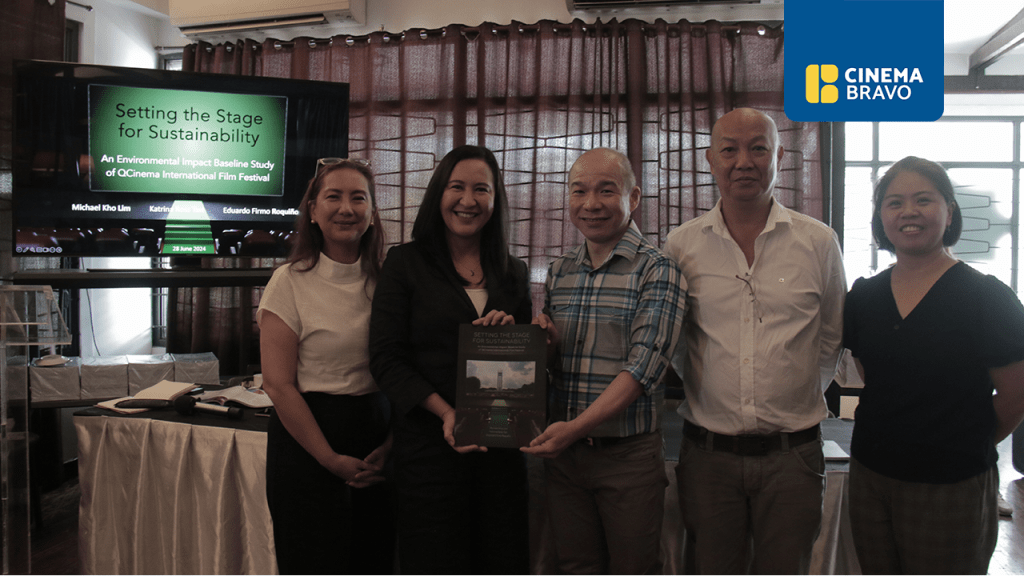
QCinema International Film Festival, as a leading filmfest in the country, is keenly aware of its environmental footprint and its significant role in shaping and influencing the film industry. In its commitment to sustainability, QCinema has participated in a study to evaluate its environmental impact as a cultural event.
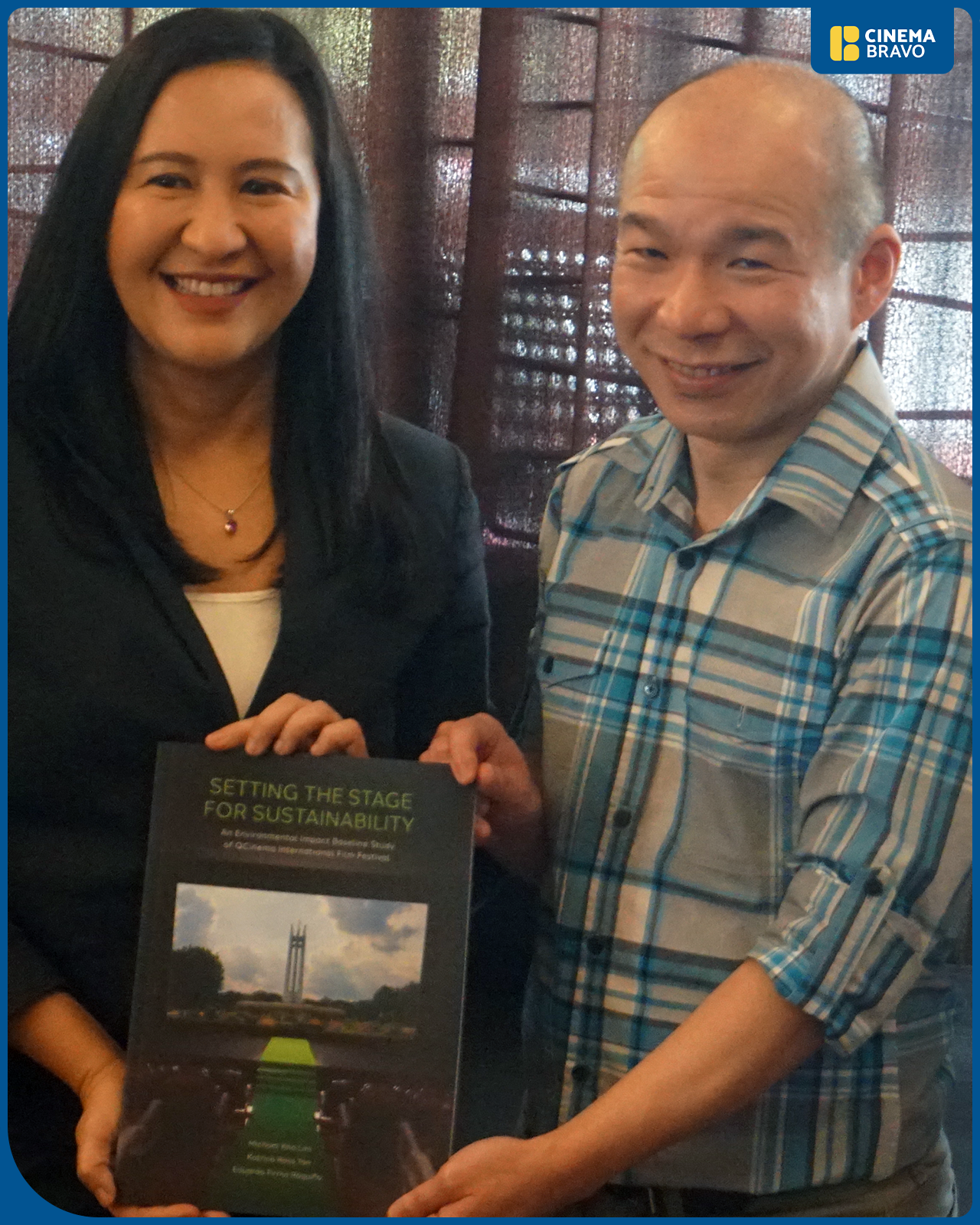
Titled “Setting the Stage for Sustainability: An Environmental Impact Baseline Study of QCinema International Film Festival,” this groundbreaking study is the first of its kind in the Philippines. It investigates the effects of cultural and creative industries on sustainability and is funded by the University of Glasgow (UofG) Glasgow Centre for International Development in collaboration with the UPLB Foundation, Inc.

Recently, the project was presented to local government officials, representatives from academia, entertainment industry stakeholders, and media professionals, highlighting QCinema’s dedication to fostering sustainable practices within the industry.
During the colloquium, which was also attended by CinemaBravo, QC Mayor Joy Belmonte made an opening remark that dug deep into the commitment and future-proofing of the long-running film festival.
She addressed to the local government officials, representatives from academia, entertainment industry stakeholders, and media professionals that Quezon City, as many of us know, is the City of Stars.
“[Quezon City] proudly embraces its rich connections to the film industry and vibrant cultural scene. Our city provides a diverse platform for local artists to express themselves and the QCinema International Film Festival stands as a prime example of this commitment.
“For over a decade, QCinema has been a center of creativity, showcasing the finest Filipino and international films on the big screen. Last year, we amplified the festival’s reach by featuring internationally acclaimed films and 10 short films selected from 380 entries across Myanmar, Indonesia, Vietnam, Singapore, Malaysia, and—of course our own country—the Philippines.
“Our aim is to be the premiere international film festival in the country and the Southeast Asian region. However, the magic of cinema stems beyond the silver screen. Today, we are both rewinding to assess our film festival’s environmental footprint, and fast-forwarding to create a sustainable future for QCinema.”
A total of 229 individuals responded to the survey. It sought to profile QCinema audiences, their festival viewing habits, level of awareness on climate change issues, willingness to act towards climate action, and perception of the festival’s economic and cultural impact.
The study found a high level of climate change awareness among QCinema audiences. It noted that 70% of respondents had a high awareness of climate change issues, and almost 86% rated climate change as an essential issue.
Also, 72.92% strongly supported climate change efforts despite less than half (48.03%) being moderately involved in activities contributing to climate change solutions. It also found out that 64.63% of respondents were willing to pay a sustainability fee on top of the ticket price.
On the ecological impact, the data showed that some 60% of the audience consumed food bought from establishments at the venues, and 76% consumed mostly water and soda, generating solid waste from popcorn, chips, water bottles, and soda cans.
This initiative to establish baseline data is the first step towards creating a possible environmental management plan and sustainability framework for the festival. This can form the basis of similar plans and frameworks for other cultural and creative activities in the country.

“There is an urgent need to adopt sustainable festival practices, especially since we are a country that celebrates thousands of festivals. Many studies have shown that mounting these events considerably negatively impacts our environment. It is high time other organizers followed suit and took significant steps that could drive the cultural and creative industries towards a greener and more sustainable future,” says Michael Kho Lim, lead researcher.
The study also examined the festival’s impact on the entertainment industry. Over 84% view the event as a pivotal educational platform. A total of 92% highly rated the festival’s contribution to appreciation of the art and craft of filmmaking. More than 85% of the respondents highly rated QCinema’s contribution to producing high-quality films.
The study also revealed that film festivals are perceived to have a significant impact on the country’s economy. Seventy-three percent of the respondents underscored the festivals’ significant role in economic stimulation, potentially boosting local spending, tourism, and employment opportunities generated by the event.








 CinemaBravo
Leave a Reply