
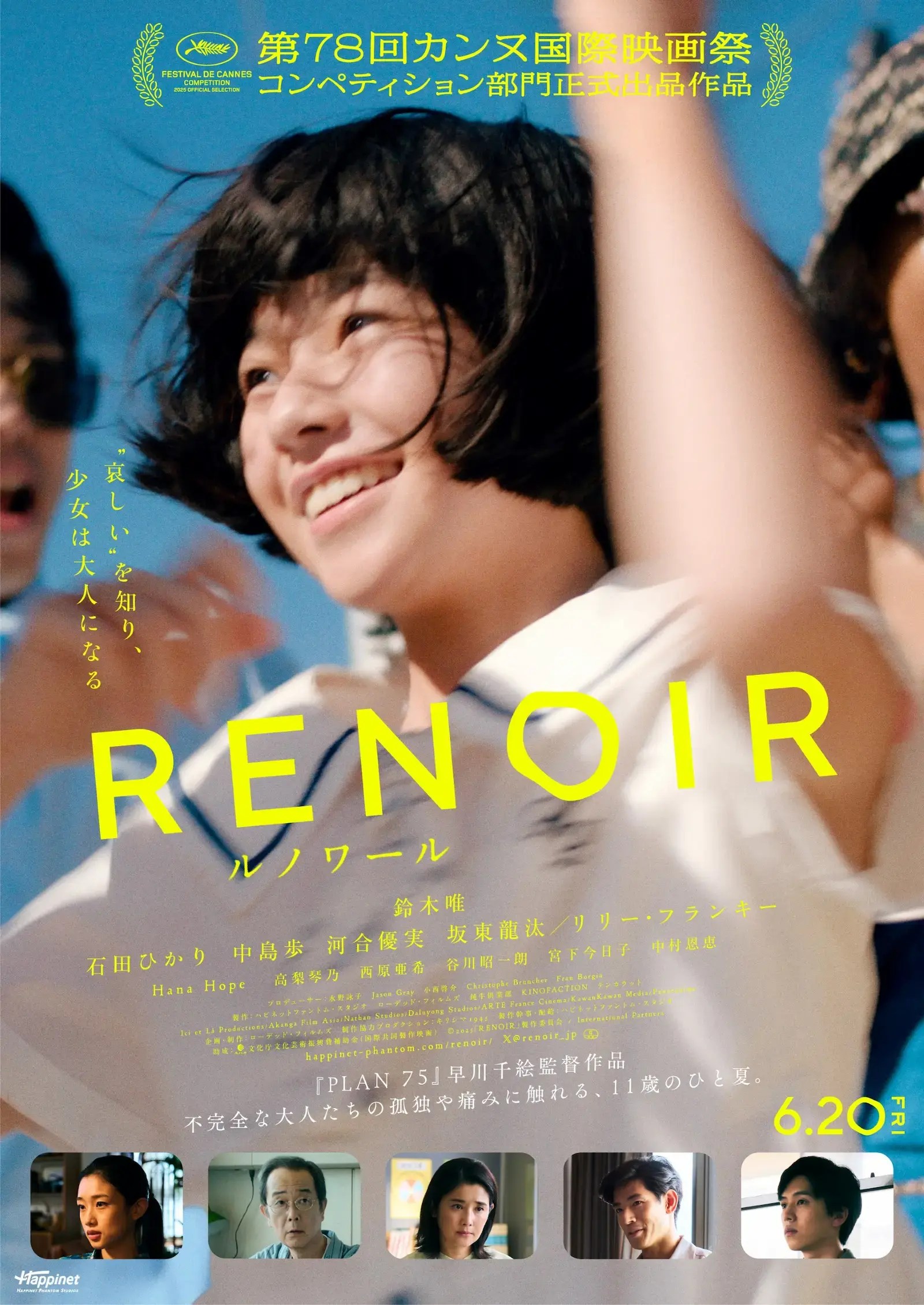
After a celebrated premiere in competition at the 2025 Cannes Film Festival, Renoir — a Japanese coming-of-age drama with Filipino roots — is making its way back to the Philippines. The film, co-produced by Nathan Studios, will have its local premiere this November at QCinema International Film Festival.
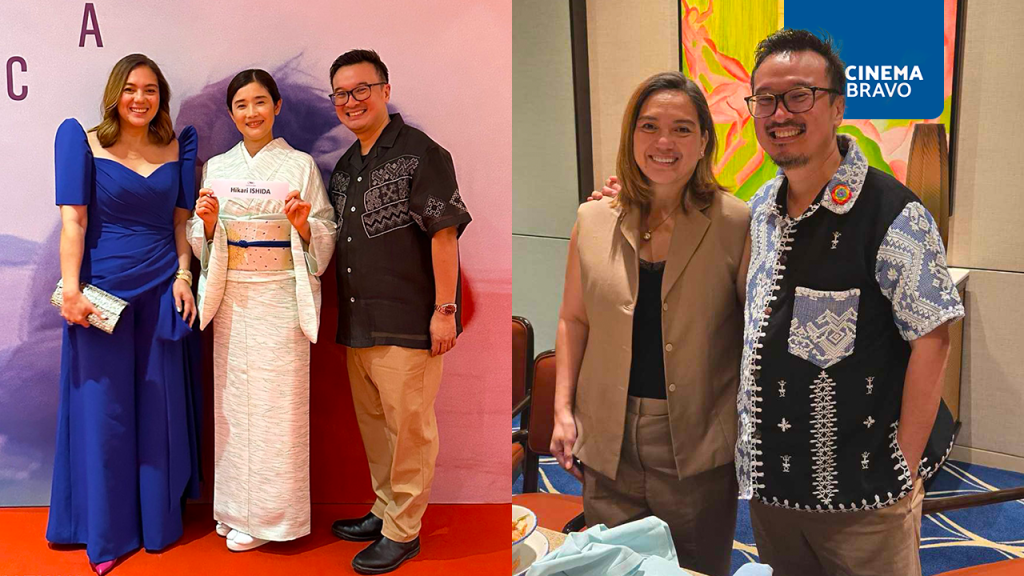
Though the film doesn’t feature a Filipino cast or setting, the involvement of Filipino producers played a deep and hands-on role. Actress and producer Sylvia Sanchez, along with co-producer Alemberg Ang, sat down for lunch with press on June 9 in Quezon City to reflect on what Renoir represents for Filipino cinema and how this global collaboration unfolded.
Filipino footprint on international film
From the outset, Sanchez clarified a common misconception about their role.
“Alam n’yo, hindi ito Pinoy movie. Hindi cast dito mga Pilipino, pero hindi kami yung gano’ng producer na nagbigay lang ng pera doon. Hindi gano’n, okay?” she shared.
(You know, this isn’t a Filipino movie. The cast isn’t Filipino, but we’re not the kind of producers who just gave money. It’s not like that, okay?)
“Nagbigay kami ng pera do’n, collaboration, [we] co-produced, but pumunta kaming dalawa ng 1 week sa Japan para mag-shooting doon. So, kasama kami. Like yung script from the start, o, sinend sa amin, okay na ba sa inyo ‘to? Yung gano’n. ‘Meron ba kayong gustong i-add o meron ba kayong question?’…”
(We invested money, yes, but it was a collaboration. We co-produced and the two of us even went to Japan for a week during filming. So we were involved. From the start, they sent us the script — “Is this okay with you?” — that kind of thing. “Do you have anything to add or any questions?”…)
This involvement wasn’t symbolic — it was active, creative, and present on set. Sanchez saw herself not just as a financier, but also as an observer and contributor.
“Nag-o-observe din, siyempre. Actually, inisip ko nga e, nag-observe ako bilang hindi lang producer kundi artista.”
(Of course, I was observing everything. I was even thinking, I wasn’t just observing as a producer, but as an actor.)
Watch our Facebook live of Renoir’s homecoming press conference here:
https://www.facebook.com/cinemabravo/videos/1845923389684454
Lessons from a Japanese set
The experience also opened Sylvia’s eyes to the major differences in production culture — especially between Japan and the Philippines.
“Pwede bang yung proseso nila, yung mga ginagawa nila, pwede bang i-apply ko as producer sa Pilipinas? Pero ako mismo’ng nag-give up. Hindi kakayanin! Malulugi ang producers sa totoo lang.”
(I was wondering if we could apply their process as producers here in the Philippines. But I gave up on the idea myself. We wouldn’t be able to manage! Producers would go bankrupt, to be honest.)
Sanchez admired the precision and attention to detail. Every gesture, sound cue, and silent moment was treated with purpose.
“Parang very strict sila sa time. And then also, meron silang ginagawa na maraming takes. Pero yung ibang takes… kikilos lang yung artista, walang dialogue, para lang sa sound effects. Tapos, uulitin ulit for other—basta, ang daming steps na ginagawa. Sobrang linis!”
(They’re very strict with time. And they do so many takes. Some takes, the actor just moves — no dialogue — just for the sound effects. Then they repeat it again for other purposes… there are so many steps. Everything is so precise!)
Even the working hours followed a strict rhythm — unfamiliar to a local crew.
“Merong three hours na trabaho. Tapos, one hour, stop, magna-nap. Tapos, three hours, one hour ulit—hindi pwede, hindi natin kaya yon!”
(They work for three hours, then stop for one hour to nap. Then work another three hours and break again — we can’t do that here!)
Despite the challenge, she expressed deep admiration.
“Pero, imagine-in mo ‘to. Nakakabilib lang sila. Ako, producer, lalo na pag artista, natuwa ako.”
(But just imagine that. They’re admirable. As a producer — and especially as an actor — I was really amazed.)
Off to QCinema 2025
Following its Cannes premiere, Renoir immediately drew the interest of Filipino cinephiles and programmers — especially the team behind QCinema.
According to Ang, “Nanood sila nung Cannes.”
(The QCinema team watched the film at Cannes.)
Sanchez elaborated on what happened next.
“Actually, right after mapanood nila yung movie, nilapitan kami naman kami ng QCinema. Like si Ed [Lejano]: ‘Sa amin na yan, ha? Sa QCinema [na yan]. Thank you na-consider sila.’”
(Actually, right after they saw the movie, QCinema came up to us. Ed Lejano even said, “That’s ours, okay? That’s for QCinema.” We’re thankful they considered it.)
It’s a fitting home for Renoir’s local debut. QCinema has established itself as a champion of world cinema and bold storytelling — a natural venue for a film that’s both intimate in theme and international in scope.
A new model for Filipino producers
Renoir is directed by acclaimed Japanese filmmaker Chie Hayakawa (Plan 75) and stars Yui Suzuki as the 11-year-old Fuki, a child coping with her father’s terminal illness. Alongside her are veteran Japanese actors Hikari Ishida and Lily Franky.
The film’s production is a joint effort among Japan’s Happinet Studios, France’s Ici et Là Productions, Singapore’s Akanga Film Asia, Indonesia’s Kawan Kawan Media, and the Philippines’ Daluyong Studios and Nathan Studios. Sales are being handled by Goodfellas, signaling strong international distribution potential.
This isn’t Nathan Studios’ first brush with Cannes. It follows two prior selections: Cattleya Killer in 2022 and Topakk in 2023 — both starring Congressman Arjo Atayde, Sylvia Sanchez’s son. With Renoir, however, the company shifts its spotlight toward quiet prestige and cross-cultural resonance.
More than just another movie credit, Renoir sets a new precedent. It shows what happens when Filipino producers move beyond borders, collaborate deeply, and challenge the idea that international success requires Filipino visibility on-screen.
This November, Renoir will finally be seen by local audiences. And with it, perhaps a new vision for the future of Filipino cinema will take root — one that travels far, but never forgets where home is.








 CinemaBravo
Leave a Reply