
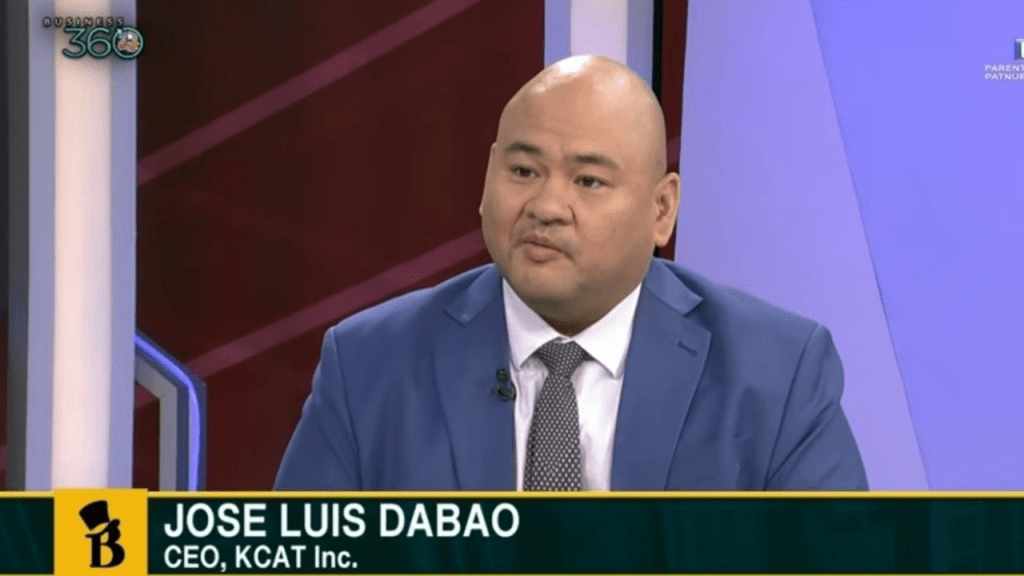
The Konektadong Pinoy Bill is poised to lower internet costs and create more employment opportunities across the Philippines, according to an industry expert.
Joel Luis Dabao, former president of the Philippine Cable and Telecommunication Association (PCTA), emphasized that the Marcos administration’s ambitious goal of cutting internet prices by up to 50 percent could be achieved once the bill is enacted into law.
“There are only a handful of players in that space. And if we have more, we can expect that cost to go down significantly,” Dabao said in a television interview with Bilyonaryo Channel.
Dabao noted that increasing competition in the telecommunications sector is key to improving service affordability and access.
Once enacted into law, Dabao expects the bill to spur digital investments in rural areas and help connect far-flung communities across the country.
By opening up the industry to more players, Dabao said more jobs will be created, particularly in far-flung areas where digital transformation can help drive economic growth and improve quality of life.
“We need it for everything. We want all of our government services to be online. We want our health to go online. We want learning to go online. We want people to start using AI. For all of these things, you need the internet,” Dabao said.
The Senate and the House of Representatives have ratified the bicameral conference committee report on the Konektadong Pinoy Act, and the measure is now awaiting the President’s approval.
Sen. Imee Marcos, principal author of Konektadong Pinoy, underscored the measure’s importance, saying it will end the outdated Congressional franchise requirement for data transmission providers.
The lawmaker said the move seeks to break the decades-long duopoly and open the door to more affordable, faster, and reliable internet, especially for far-flung and underserved communities.
“This is the moment for us to side with the masses and not the monopolies,” Senator Marcos urged.
Navotas Rep. Toby Tiangco echoed the sentiment, saying the bill would boost broadband access, level the playing field for businesses, and drive economic growth.
“Our country will not have economic development if we have slow internet. This law will not only make connectivity faster, but it will also help level the playing field for businesses across the country,” Tiangco said.
DICT Secretary Henry Rhoel Aguda welcomed the measure, stating that it would help create a more inclusive and affordable digital ecosystem while accelerating the rollout of next-generation technologies, such as 5G.
He believes that President Marcos will sign it into law, noting that Konektadong Pinoy is among the priority legislation of the present administration, as agreed upon during the Legislative-Executive Development Advisory Council (LEDAC) meeting.
Arsenio Balisacan, Department of Economy, Planning, and Development (DEPDev) Secretary, described the measure as a “game changer” as it introduces comprehensive reforms designed to open the market, enhance competition, reduce network rollout costs, and increase the quality and availability of digital services.
“The bill removes the requirement for a legislative franchise to build and operate data transmission infrastructure. Instead, a streamlined registration or authorization process with the National Telecommunications Commission will make it easier for new players to enter the market, especially in underserved areas,” he said.
Dabao also allayed concerns that the measure might lead to an uneven playing field, saying the Department of Information and Communications Technology (DICT) and the National Telecommunications Commission (NTC) are empowered to establish standards that all players will be required to follow, including existing providers.
“So whatever they have to follow, the new players are going to have to follow as the law states very specifically,” he explained.
Having tracked the bill’s progress in the past eight years, Dabao expressed confidence that it contains sufficient guardrails that will protect the industry and allow regulators to quickly adapt to the sector’s evolving needs.
Dabao is optimistic that President Ferdinand Marcos Jr. will sign Konektadong Pinoy into law, despite concerns raised by some sectors.
“I think he is going to sign it. I mean, he may listen to some feedback, but I do hope that the bill comes out to do what it’s intended to do,” he said.
Photo credit: Screenshot via Bilyonaryo interview with Jose Luis Dabao








 CinemaBravo
Leave a Reply