
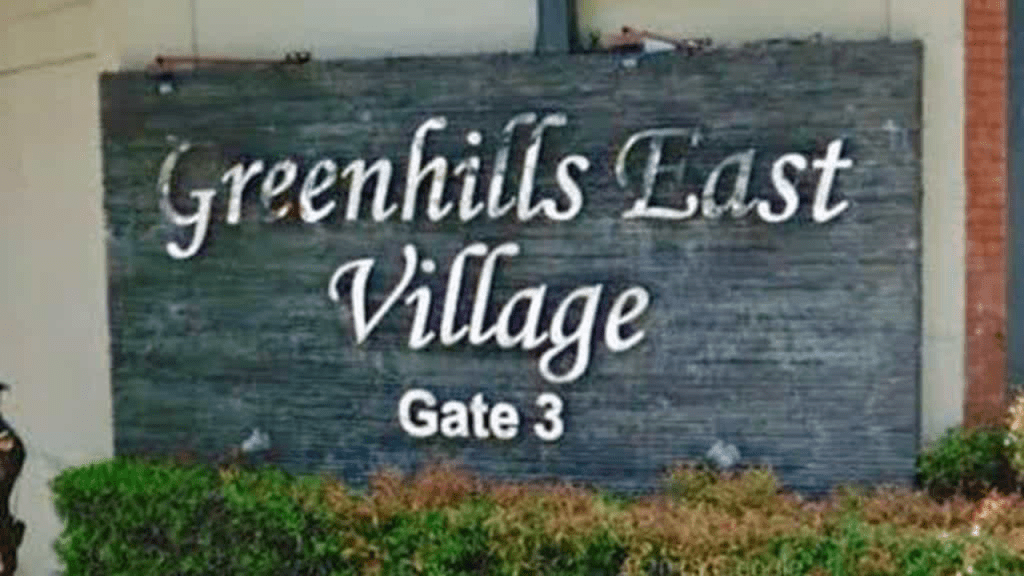
Residents of Greenhills East Village are formally opposing a proposed high-rise project by Shang Properties Inc. (SPI), raising concerns over what they claim is a threat to the safety, peace, and overall quality of life in their community. They argue that the development violates existing zoning laws and contradicts Mandaluyong City’s urban planning policies, including those previously emphasized by Mayor Carmelita “Menchie” Abalos.
The property in question spans 6,511 square meters and is located along Ortigas Avenue, adjacent to La Salle Green Hills. Though situated within Barangay Wack-Wack in Mandaluyong, the site is only a few meters away from the border of San Juan. According to reports, the proposed development involves the construction of a multi-tower condominium complex, with a projected completion period of nine years.
For residents, that lengthy timeline raises alarm bells. They believe nearly a decade of continuous construction could significantly disrupt the surrounding school zone—posing risks to children, elderly citizens, and the broader community environment.
Their message is clear: they are not opposing progress, but rather the disruption that may come with it.
“We’re not anti-progress. We’re anti-chaos.”
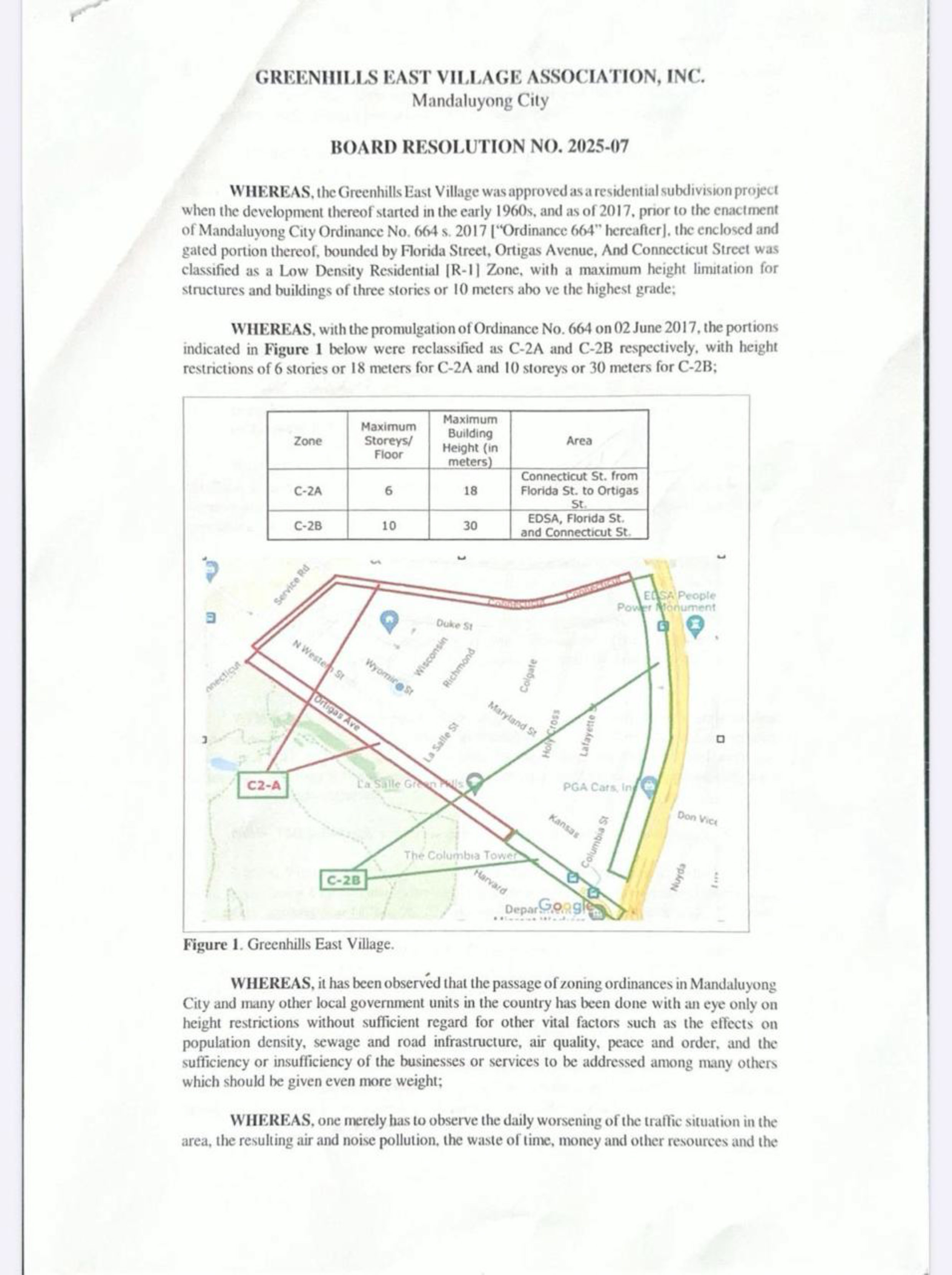
Community members are also pointing to previous statements and policies from Mayor Abalos, asserting that the proposed SPI project runs counter to her administration’s own principles on responsible urban development. Far from a case of simple NIMBYism (“Not In My Backyard”), residents are presenting what they consider solid evidence that the plan undermines long-standing guidelines intended to preserve safety and order in the city’s residential zones.
In their petition, residents cite the Green Building Ordinance (No. 709, s. 2018) and the Comprehensive Land Use Plan (2017–2032), both enacted under Abalos’ leadership. These policies emphasize health, sustainability, and inclusive growth.
“Is a nine-year construction site beside a school ‘child-friendly’?” asked one concerned parent, referencing Mandaluyong’s accolades for child-sensitive governance. “Is it green? Is it even necessary?”
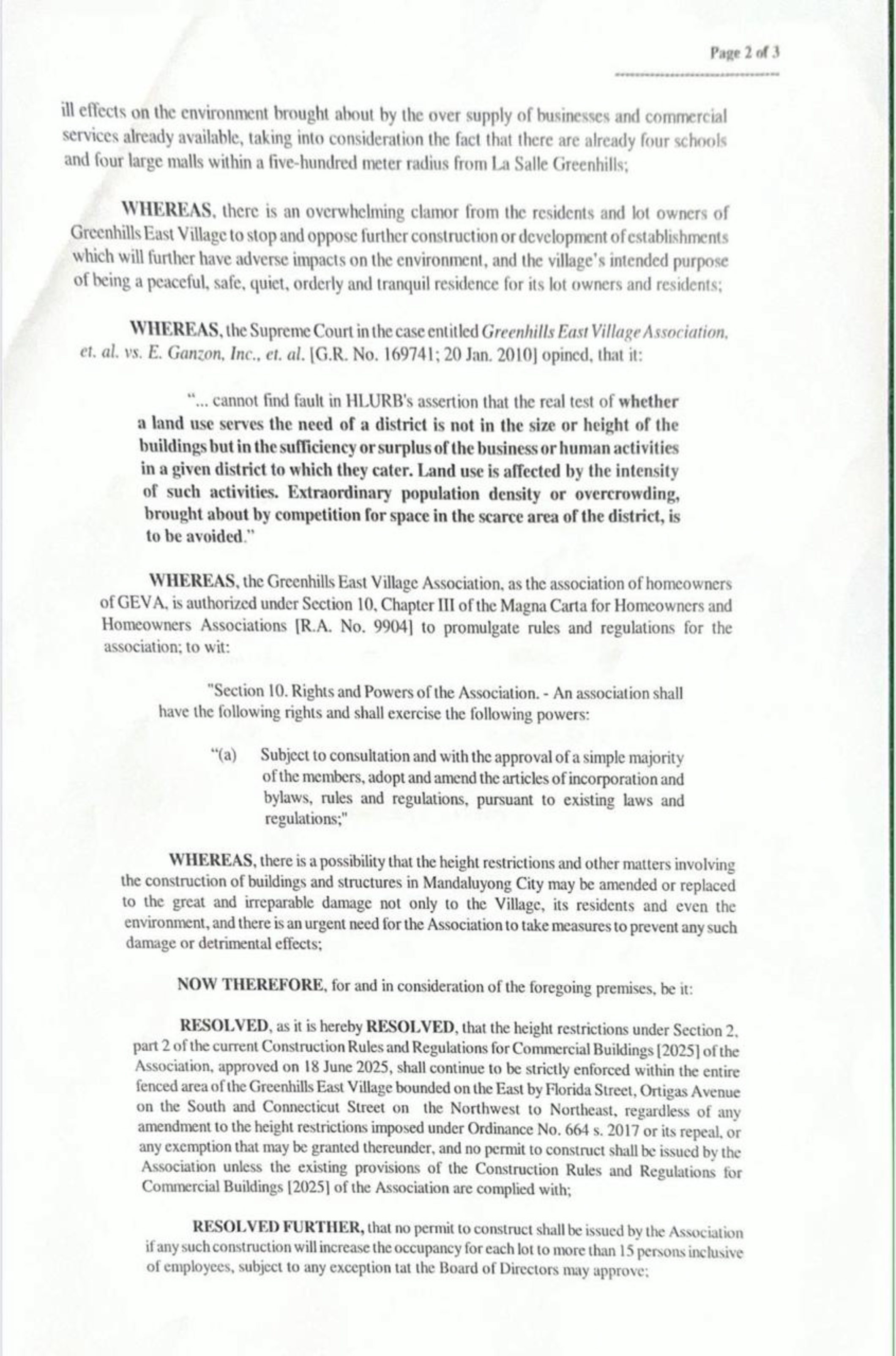
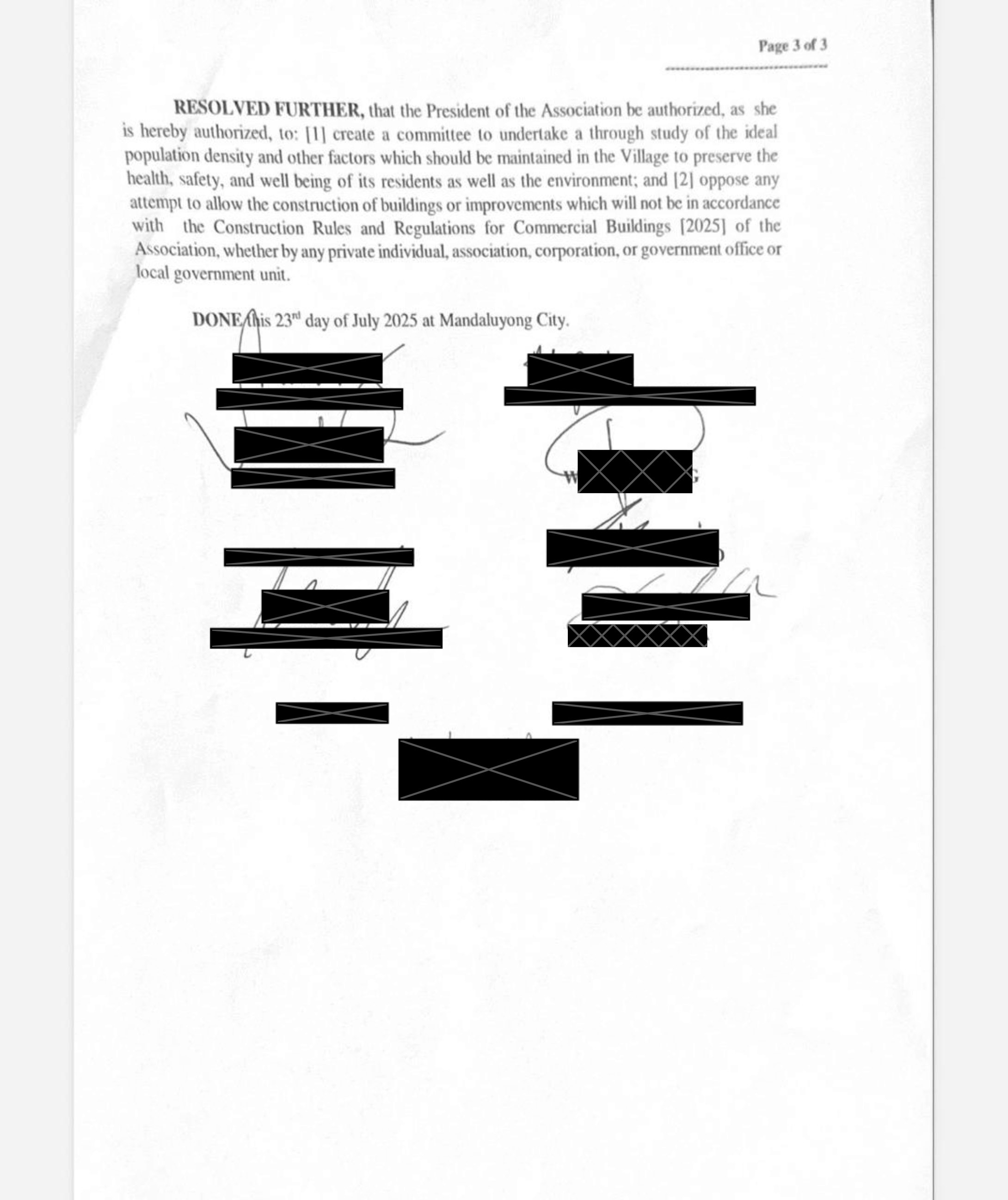
The opposition isn’t just noise—it’s backed by a formal resolution from the Greenhills East Village Association (GEVA). Citing Board Resolution No. 2025-07, passed on July 23, 2025, GEVA has resolved to strictly enforce height limits for any new commercial construction within the village: six stories or 18 meters for C-2A zones, and 10 stories or 30 meters for C-2B zones, per Ordinance No. 664 s. 2017. No exceptions.
The resolution stresses that any development which “increases the occupancy for each lot to more than 15 persons inclusive of employees” will be rejected. The board also empowered the Association President to oppose all non-compliant construction and establish a committee to study population density and urban sustainability in the area.
The resolution notes that Mandaluyong—and Metro Manila at large—has fallen into a trap: approving massive developments with little regard for road capacity, air quality, or sewage infrastructure. With four malls and four schools already within a 500-meter radius, residents say adding another vertical village will tip the scales from livable to nightmarish.
A line from the resolution reads:
“Extraordinary population density or overcrowding, brought about by competition for space in the scarce area of the district, is to be avoided.”
Or, as one resident bluntly put it: “We’re drowning in diesel, delivery trucks, and double-parking. What part of ‘overcapacity’ is hard to get?”
This cross-city resistance could mark a turning point in Metro Manila’s long-tolerated culture of “development at all costs.” The residents’ petition calls on Mayor Abalos not just to acknowledge the project, but to uphold her administration’s own promises of planned, responsible urban growth.
“We’re not saying no to development,” said a resident. “We’re saying yes to smart, humane, law-abiding development. There’s a difference.”








 CinemaBravo
Leave a Reply