

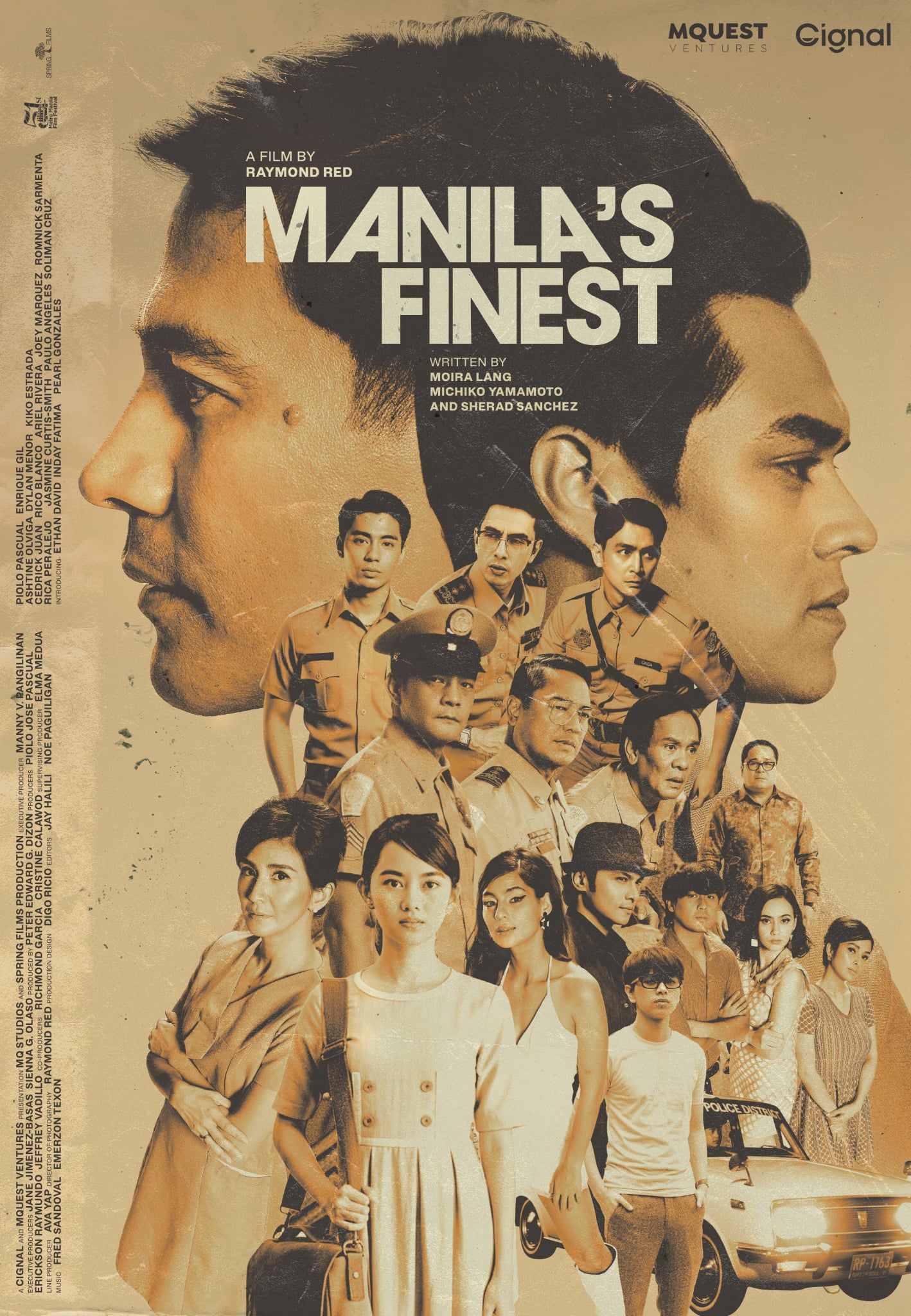
Manila’s Finest is set in Manila in 1969 and places its story within the city’s police force during a period marked by unrest and criminal activity. The film, directed by Cannes Palme d’Or-winning filmmaker Raymond Red, is an official entry in the Metro Manila Film Festival and presents a period setting defined by vintage patrol cars, era-appropriate uniforms, and locations that reflect the social conditions of the time.
The narrative follows Captain Homer Magtibay, portrayed by Piolo Pascual, and his partner Lieutenant Billy Ojeda, played by Enrique Gil. Assigned to maintain order in a city affected by gang conflicts and corruption, the two officers navigate cases that expose the challenges faced by law enforcement during that era. Their partnership serves as the central framework of the story as they confront both external threats and internal pressures within the system.
While structured as a police procedural, the film also places emphasis on personal relationships. The storyline connects the professional duties of its lead characters with their roles within their families, presenting how decisions made in the line of duty intersect with responsibilities at home.
By situating its events across a specific historical period, Manila’s Finest links past and present social issues through its depiction of crime, authority, and family life. The film presents integrity, brotherhood, and familial ties as recurring elements within its narrative, showing how these themes operate within the context of 1960s Manila.
The movie poses a question for every parent: How do we teach our children to stand firm in a world that is often compromising? Captain Magtibay isn’t just a policeman; he is a father to his daughter, Agnes (Ashtine Olviga). His struggle is against the cynicism threatening his soul. When he declares, “Kung gusto nating magbago ang Maynila, kailangan manggaling sa atin ang pagbabago” (If we want Manila to change, it must come from us), he speaks to every family in the cinema. It’s a powerful lesson in accountability that parents can discuss with their children long after the credits roll.
For Gen Z and millennials, represented by the fiery energy of characters like Billy Ojeda, the film offers a mirror to their own search for purpose. The 1969 setting isn’t just a history lesson; the emotional landscape is current. It tells our youth that being “the finest” isn’t about a badge, but about character.
Manila’s Finest redefines “family” to extend beyond blood. The brotherhood shared by the officers reflects the Filipino value of bayanihan. It challenges the audience to distinguish between blind loyalty and principled brotherhood, making it an excellent conversation starter.
This holiday season, bring the whole family. Come for the stellar performances of Pascual and Gil, but stay for the message. Manila’s Finest reminds us that true heroes are those who hold the line—for their principles, their city, and their families. It is a cinematic time machine that takes us back to 1969 to show us exactly what we need to be doing today.








 CinemaBravo
Leave a Reply