
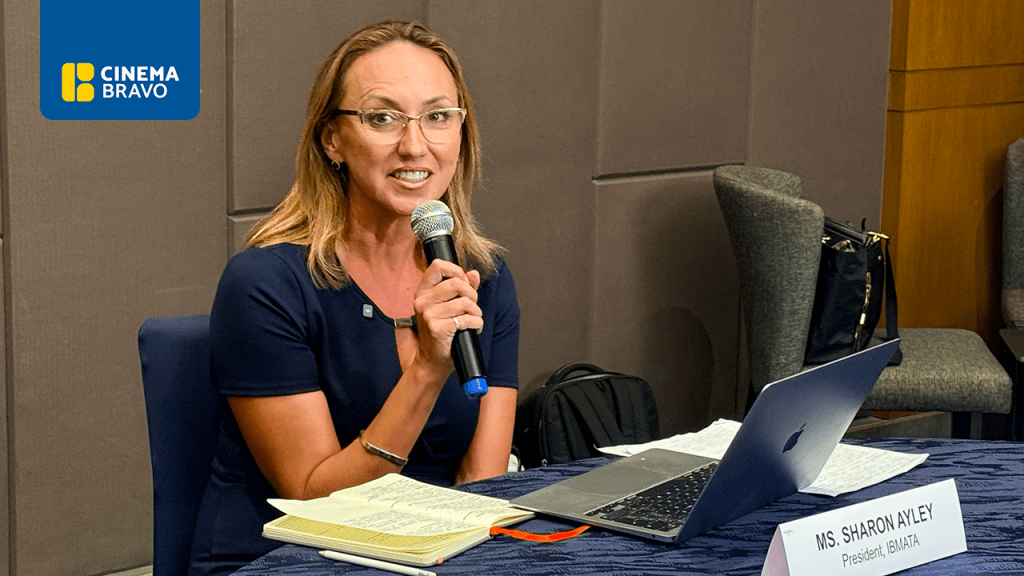
Border security expert Sharon Ayley faced Philippine media on April 13 in Pasay City, where she outlined urgent challenges in managing the country’s borders ahead of her scheduled meeting with Bureau of Immigration Commissioner Anthony Viado.
Speaking at the press conference, Ayley—Chief Executive Officer and Secretary of the International Border Management and Technologies Association (IBMATA)—framed the Philippines’ situation within a rapidly evolving global landscape shaped by migration flows, geopolitical tensions, and increasingly complex security threats.
Responding to a question from CinemaBravo about how the Philippines’ archipelagic nature affects border security, Ayley acknowledged the scale of the challenge.
“The biggest factor and the most challenging factor is on having multiple ports of entry which does put additional pressure on our border agency,” she said, pointing out that the country’s geography creates both logistical and security hurdles.
She added that standardization remains key, granted that we have many airports, seaports, and other entry points.
“The best way of managing that is by standardizing solutions across your border.”
Why fast-changing landscape matters for the Philippines
Drawing from IBMATA’s global work, Ayley explained that border management today goes far beyond immigration counters.
“It’s not just about moving people—it’s about moving goods… security threats… anything that comes in or goes out of your country. That’s your border,” she said, clarifying the concept in layman’s terms when asked during the presscon.
She described the current environment as ‘fast-moving and complex,” where governments must deal with increased migration, rising security threats, and growing expectations for seamless travel and trade. In this context, she stressed that technology is no longer optional.
“Technology is no longer a luxury… it’s a necessity—but it must be deployed intelligently, ethically, and collaboratively,” she underscored.
18 months after first PH visit
Ayley’s return to the Philippines comes 18 months after IBMATA held its Asia-Pacific summit in Manila, where human trafficking emerged as a key concern.
“We ran a workshop on human trafficking… bringing together government officials, industry professionals, and subject matter experts… to explore ways we might contribute toward finding a solution,” she shared.
Her current visit includes meetings with stakeholders and a scheduled discussion with the BI chief.
“I’m very keen to understand what’s happened in the last 18 months—what developments have been made, what’s new in the region,” she said.
She also highlighted the Philippines’ vulnerability to trafficking, citing global data from the International Organization for Migration (IOM), which identified the country as one of the leading sources of trafficking victims. Economic pressures linked to global conflicts, she highlighted, can further increase risks.
“I think that’s where it begins: making sure people are aware of how traffickers operate and how they target vulnerable individuals.”
She also emphasized the role of families and communities as a first line of defense.
Technology, coordination, limits of border control
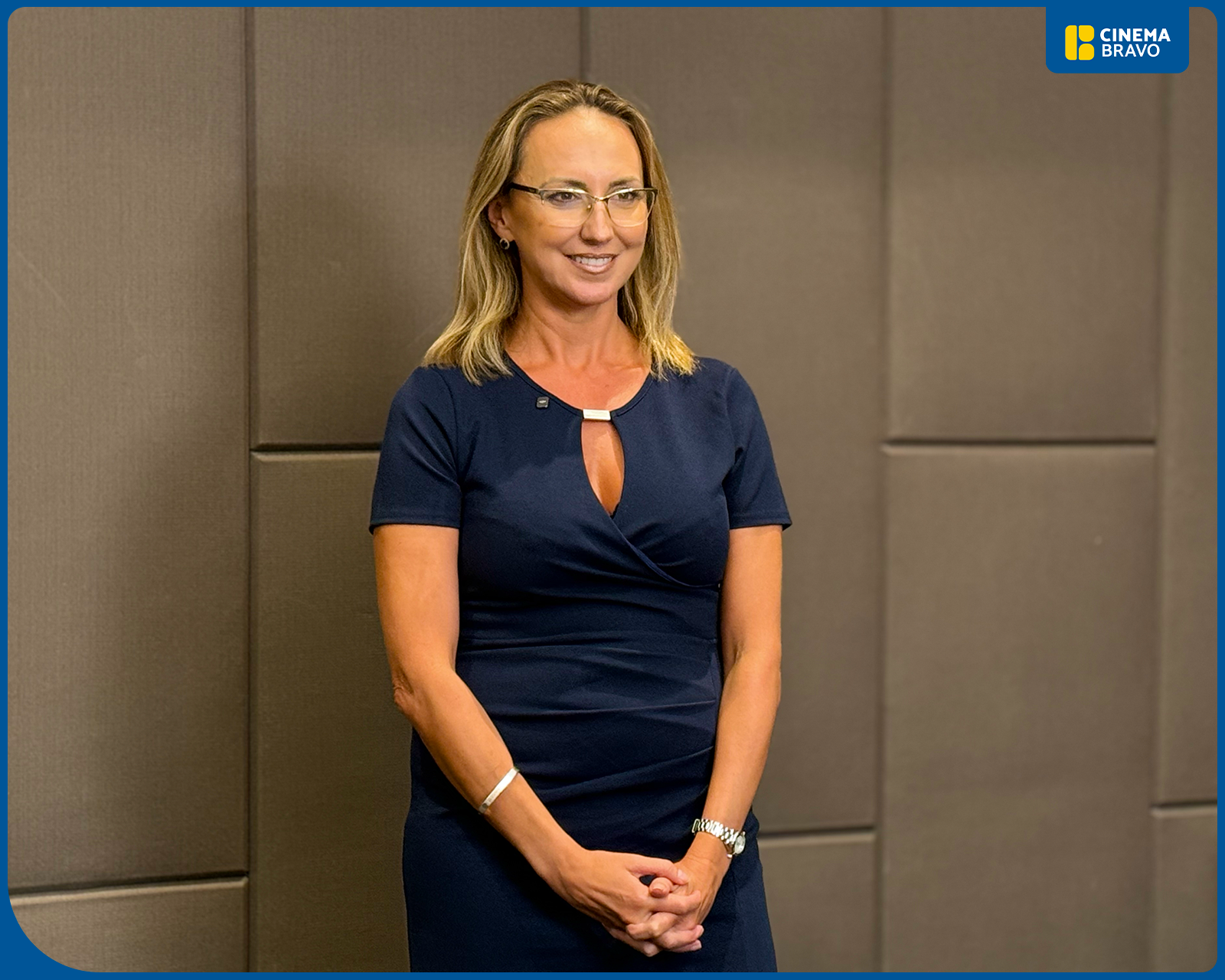
Ayley reiterated IBMATA’s push for risk-based border management systems. This is an approach she previously recommended for the Philippines.
“The key is risk-based, data integration, bringing together travel history, behavioral indicators, and watch lists in real time,” she said.
More so, she explained that advanced analytics and artificial intelligence can flag unusual travel patterns.
Further into the discussion, she elaborated on how this works in practice, introducing the concept of “exporting the border.” Instead of waiting for passengers to arrive, authorities should gather and assess data earlier in the travel process.
“You want to get that data ahead of the passenger traveling… so you can make a decision to actually either prevent that person from even boarding the plane,” she explained.
This system allows low-risk travelers to move efficiently while enabling authorities to focus on high-risk cases. It also helps balance security with traveler experience, which is an issue she addressed when asked about offloaded passengers and airport congestion.
“You don’t want queues in your airport… it’s often a traveler’s first impression of the country,” she added.
She even noting that technologies like e-gates and biometrics can speed up processing. However, she stressed that automation cannot replace human judgment.
“An e-gate can’t interview. It can’t read behavior… that’s where immigration officers are important,” she said.
Beyond technology, it goes without saying that inter-agency cooperation remains the most critical factor in effective border management.
Recommendations, not prescriptions
IBMATA, she clarified, does not dictate policy but serves as a platform connecting governments and industry players.
“You basically need everyone working together for a common goal… if you’re not communicating, you’re going to drop the ball,” she said.
“Let’s work together, communicate effectively, and make the world a little safer.”
“We don’t give advice… we facilitate conversation, share knowledge, and help build collaboration,” she said.
Still, even with the best systems in place, she acknowledged that vulnerabilities will always exist.
“There is no perfect border… as fast as technologies develop, criminality changes,” she said.
As she prepares for her meeting with the Bureau of Immigration, Ayley emphasized the need for adaptability.
“Borders are evolving all the time… the key is to be as flexible as possible to cope with new challenges,” she said.
IBMATA is set to continue its engagement in the Asia-Pacific region through upcoming events, reinforcing its mission to connect governments, industry players, and experts—with a clear goal in mind:
“Let’s work together! Let’s communicate… and let’s try to make the world a little bit safer.”








 CinemaBravo
Leave a Reply