
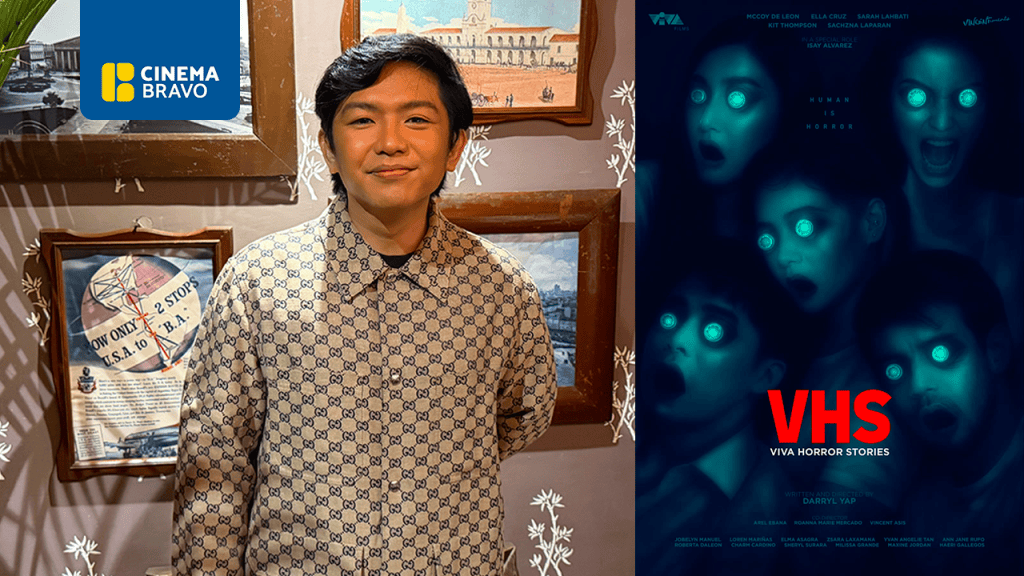
Controversial writer-director Darryl Yap has built a reputation for provocative films, incendiary remarks, and public feuds that have repeatedly landed him in hot water. His work and statements have drawn fierce backlash, earning him no shortage of haters and bashers. Despite the controversies (and even a lawsuit), Yap continues to secure film projects and bring his stories to the big screen.
During a pocket interview with CinemaBravo on October 25, Direk Darryl, as he is fondly called, discussed the harshest comments he has received online, including accusations of pedophilia that he insists are untrue. He also explained the context behind his controversial tweet that resurfaced years after it was posted.
Now on his 18th film, Yap is venturing into horror for the first time with ‘VHS (Viva Horror Stories),’ which opens on October 28 as part of the Sine Sindak horror film festival. The filmmaker describes it as a different kind of horror, one that goes beyond monsters and supernatural elements to examine Filipinos themselves.
On the harshest comments: ‘PDF’ accusations and arson claims
Given Yap’s reputation for being outspoken and provocative, CinemaBravo asked him directly: “Ano’ng pinakamalalang comment na nabasa mo?” (What is the worst comment you have read?)
He answered, “I cannot say na malala (worst), but my family is affected with the pedophile issue kasi it’s not true.”
Direk Darryl explained that the accusations have affected his parents, who sometimes wonder where such claims originated. He said he is less personally affected by the comments, although his family still has to deal with the allegations.
The filmmaker also recalled reading an accusation that he had allegedly burned down a community, supposedly making him an arsonist.
“Meron din akong nabasa na sinunog daw akong community, naging arsonista na ako,” he said. (I also read something claiming that I had burned down a community, making me an arsonist.)
Yap described such accusations as “sobrang weird, sobrang outrageous, sobrang unbelievable.” (Extremely weird, extremely outrageous, extremely unbelievable.)
Despite the severity of some of the claims, he maintained that he tries not to dwell on them.
“But, you know, I really don’t mind. I really don’t mind,” he emphasized.
Explaining the controversial “masarap ang bata” tweet
Our conversation also turned to the old tweet that continues to resurface whenever Yap becomes the subject of online discussions. The post contained the phrase “Masarap ang bata” and drew widespread criticism when it circulated years after it was published.
Yap recalled that he was active on Twitter, now known as X, when he posted a photo of himself wearing a jumper. At the time, he said, he did not expect to become recognizable to a wider audience.
He then recounted an exchange with a user who allegedly told him that he seemed attractive but looked young. According to Yap, his response was screenshotted and circulated online.
Yap said the exchange was subsequently presented as though he had made a statement endorsing sexual interest in children. However, he also acknowledged that he could have handled the situation differently.
“Hindi ko naman alam, you know, dapat binura ko na pala yun agad pa noon,” he recalled. (I didn’t realize it then, but I should have deleted it right away.)
Yap admitted that the original thread contained further exchanges he was no longer proud of. He explained that he would rather not reproduce the entire conversation because doing so would not help his case.
He also revealed that he had shown the full thread to television host Boy Abunda.
“Tawa lang siya nang tawa!” Yap said. (He just kept laughing!)
His childhood encounter with filmmaking
Despite his interest in telling stories that could elevate Philippine horror, Yap admitted that he never imagined himself making a horror movie.
Asked by CinemaBravo whether he had ever envisioned entering the genre, the filmmaker explained that his usual storytelling formula revolves around comedy and drama. Horror, he discovered, would require him to step outside his comfort zone.
“I’m not a fan of horror kasi,” he said. “Pero as a kuwentista, as a storyteller, I’ve always aspired to come up with stories that will elevate Philippine horror.”
His interest in filmmaking can be traced back to a childhood memory he shared during the interview. Yap recalled being an extra on the set of ‘Dahas sa Olongapo,’ accompanied by his grandmother. He remembered the experience as one of his earliest encounters with the world of filmmaking.
He recounted watching director Chito S. Roño command the set during a scene involving a person causing a disturbance. Roño’s presence left a strong impression on the young Yap, who was fascinated by how the director could command attention and control the scene.
The experience became one of his earliest awakenings to filmmaking. Yap also remembered the production as a violent film, which helped shape his early understanding of what could make a story frightening.
“I think that’s horrifying enough,” he reflected.
For Yap, however, horror filmmaking involves more than violence or frightening situations. He believes supernatural elements and mystery are essential to the genre.
“With standards of storytelling, standards of filmmaking, it’s not horror if it’s not supernatural,” he noted. “So you have to sprinkle a little bit of mystery and supernaturality to it.”
Taking a different approach to Pinoy horror
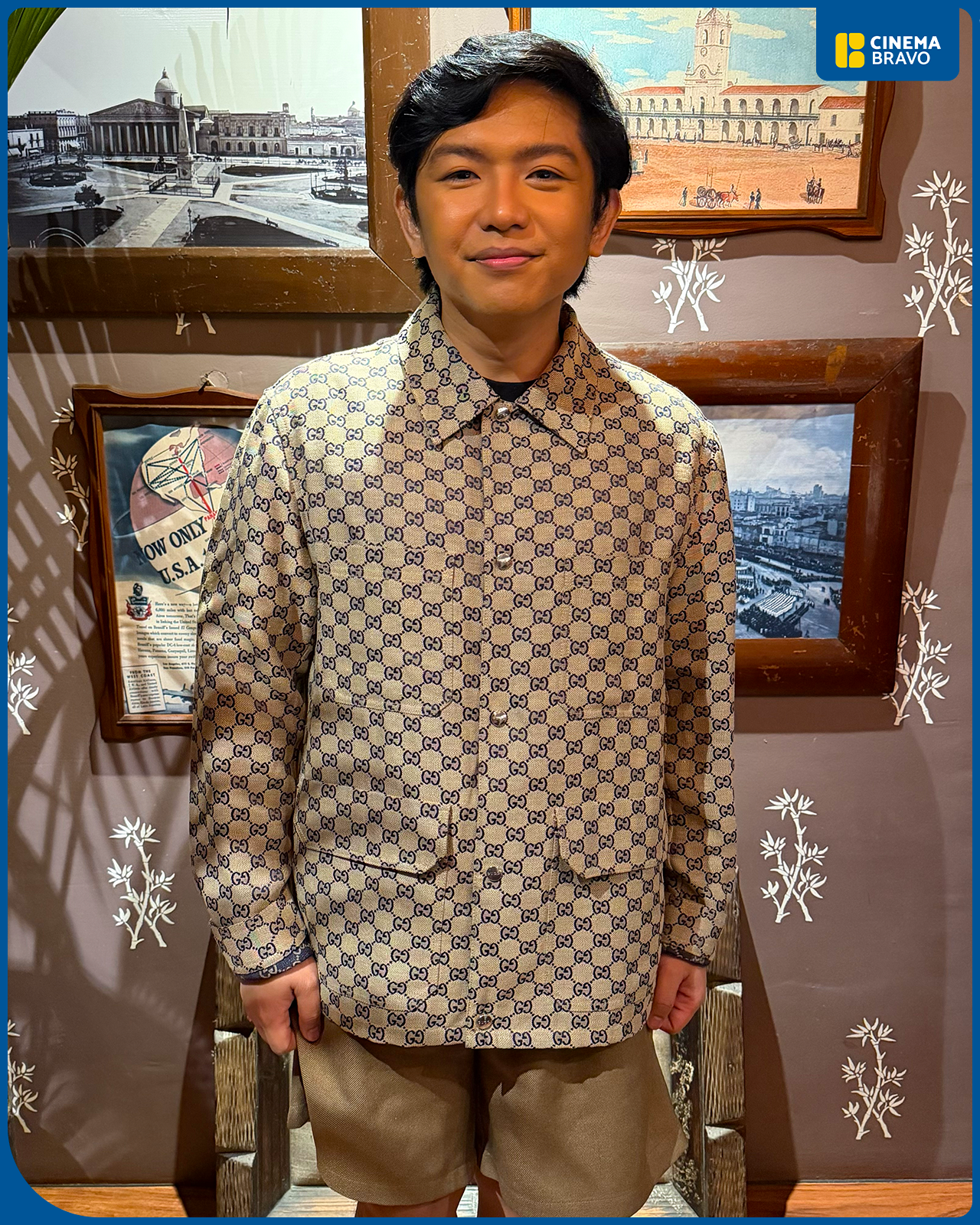
Yap eventually got the opportunity to explore the genre when Viva suggested adapting some of his old one-act plays into a horror project. He agreed to take on the challenge, resulting in ‘VHS (Viva Horror Stories).’
“This is a new type of horror talaga. I don’t know whether the Filipino people will accept it as is,” he said.
Asked to describe the film, Yap explained that it does not fit neatly into familiar horror categories. It features monsters and supernatural elements, but these are not the main focus of the stories.
“VHS is very different. VHS is horror. I cannot say it’s psychological. I cannot say it’s a monster film,” he said.
He elaborated that the film contains the elements typically associated with horror. However, its central focus goes beyond the creatures and supernatural occurrences audiences will encounter on screen.
“Meron akong halimaw, meron akong supernatural, meron akong ganoon. Pero hindi sila yung focus,” he explained. (I have monsters, supernatural elements, and things like that. But they are not the focus.)
Instead, Yap wants the film to examine the people themselves. He admitted that he is unsure whether Filipino audiences are ready for a horror movie that explores their own identity and behavior.
“I’m not sure if the Filipino audience is ready for a horror that is discussing who they are or who we are as Filipinos,” he said.
That uncertainty has not dampened his excitement about the project. Yap said he is eager to see how viewers respond to his unconventional take on the genre.
“Magustuhan nila o hindi, bayád ako at the end of the day,” he quipped. (Whether they like it or not, I get paid at the end of the day.)
Horror comes with unexpected challenges
While ‘VHS’ gave Yap the opportunity to explore a new genre, the experience also revealed how demanding horror filmmaking can be.
“Pero I’m telling you now, it will be very, very long na ulitin ko. Nakakapagod pala yung horror. Nakakapagod,” he underscored. (But I’m telling you now, it will be a long time before I do it again. Horror is exhausting. It’s exhausting.)
Beyond the demands of production, Yap found that horror filmmaking could require additional expenses. He explained that elaborate makeup and special effects take considerable time and effort, sometimes requiring talents and crew members to spend hours preparing for a single scene.
He cited makeup artists who spend six to seven hours preparing performers for their roles. Even when these workers receive the standard rate for their position, he said, he finds it difficult to overlook the extra effort they put into the production.
Yap explained that he sometimes gives additional compensation to workers who go beyond what is expected of them.
For the filmmaker, making a horror movie has become a lesson not only in storytelling but also in the practical demands of production. The experience has pushed him beyond the comedy-drama formula he knows best.
What to expect from ‘VHS (Viva Horror Stories)’
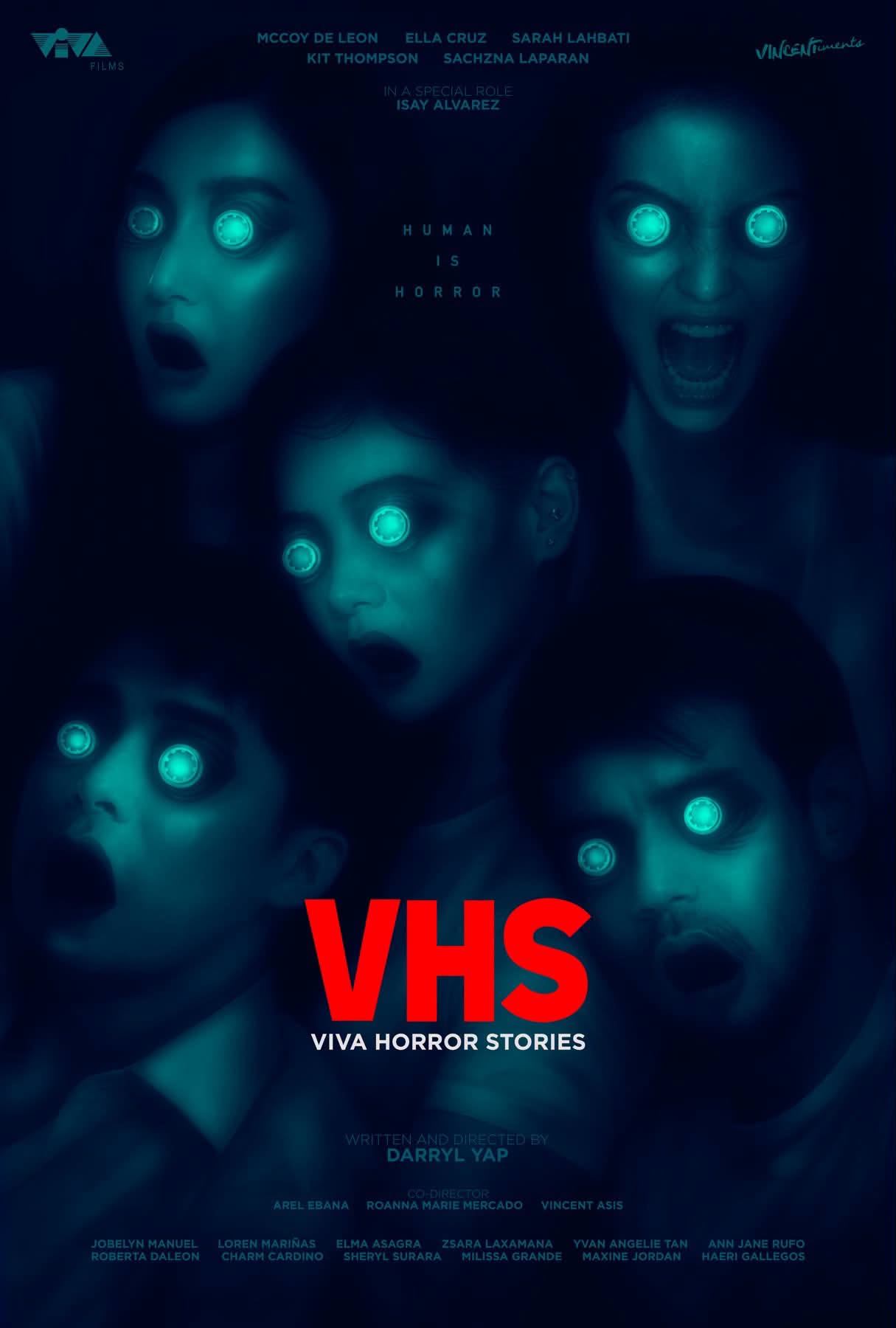
‘VHS (Viva Horror Stories)’ is a three-part horror anthology featuring stories involving sinister forces, disturbing secrets, and difficult choices.
One story follows a cheerleader played by Sachzna Laparan who is haunted by a sinister presence on campus. Another centers on a seemingly perfect romance between McCoy de Leon and Ella Cruz that conceals a horrifying secret. The third follows a celebrity couple played by Kit Thompson and Sarah Lahbati as they face a difficult decision after the birth of their child.
The title plays on the familiar abbreviation for Video Home System, the format once used for home video recordings. In this case, VHS stands for ‘Viva Horror Stories.’
The film is part of Viva’s 45th anniversary celebration and the seventh edition of the annual horror film festival ‘Sine Sindak.’ It is the festival’s only Filipino title this year.
Rated R-13 by the Movie and Television Review and Classification Board (MTRCB), ‘VHS (Viva Horror Stories)’ opens on October 28, 2026. Tickets are priced at just ₱100 for the Sine Sindak run, which continues until November 3.
With ‘VHS,’ Yap is stepping into unfamiliar territory while retaining his interest in stories that provoke strong reactions. This time, he wants audiences to look beyond the monsters and supernatural scares and confront what his stories reveal about Filipinos themselves.
Whether moviegoers will embrace his unconventional approach remains to be seen. But the film’s message is already laid out in its opening titles:
You cannot spell TAKOT without TAO.










Leave a Reply